Self-Hosted vs Cloud API for a Kimi/GLM Lead-Gen Chatbot (2026)
Self-hosted vs cloud API for a Kimi/GLM lead-gen chatbot: cloud wins on cost and simplicity for most; self-host wins on privacy and high volume.
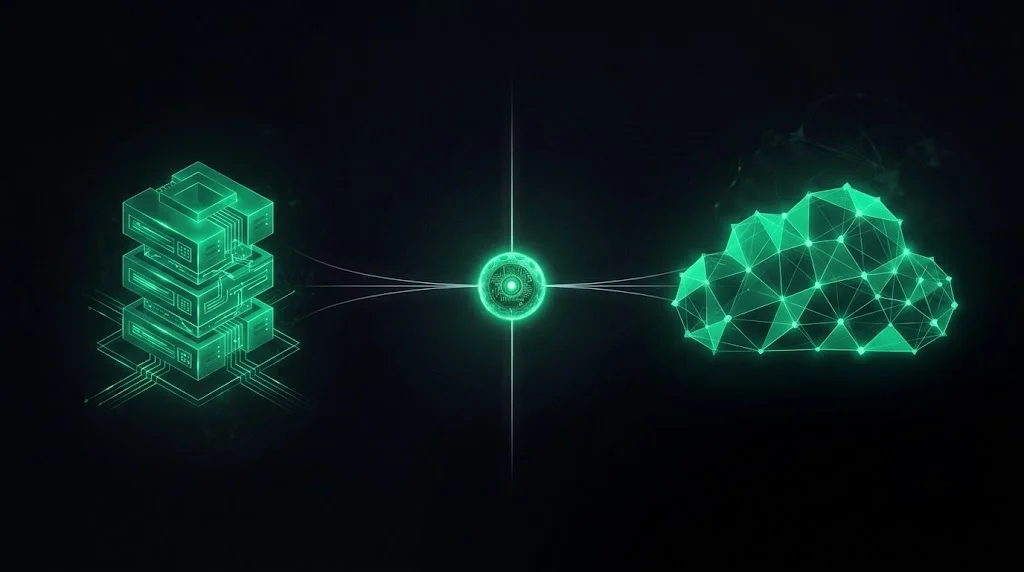
Self-Hosted vs Cloud API for a Kimi/GLM Lead-Gen Chatbot (2026)
For most lead-gen chatbots, a cheap cloud API is the right call: near-zero setup, no GPU to buy, elastic scale, and pennies per conversation. Go self-hosted on Ollama when your lead data is sensitive enough to keep entirely on your own server, or when sustained volume is high enough that per-token fees outgrow the cost of running your own hardware. That is the whole decision, and the rest of this page shows you why.
OpenClaw supports both paths, so the choice is not locked in by the software. You can run Kimi K2.6 or GLM-5.2 against a hosted API today and move the whole thing onto your own box later without rewriting your widget.
What are the options?
There are three realistic ways to power a Kimi or GLM lead-gen chatbot in 2026, and they sit on a spectrum from most-DIY to most-hands-off.
- Self-hosted (Ollama on your own hardware). You run the model on a GPU or server you own or rent. Full privacy, zero per-token cost, and total control. The catch is that big models like Kimi K2.6 (a 1T-parameter mixture-of-experts model) or GLM-5.2 need serious, expensive hardware, and you own uptime, updates, and scaling.
- Cloud API (Moonshot AI, Z.AI, OpenRouter). You call a hosted endpoint and pay per token. No hardware, no ops, and elastic scale that absorbs traffic spikes automatically. The trade-off is that your lead data goes to the provider, and cost rises with volume.
- Ollama Cloud (the middle path). Ollama Cloud hosts kimi-k2.6 and glm-5.2 as pay-as-you-go endpoints. You get a hosted model with no GPU to buy, using the same Ollama tooling you would use locally - a soft on-ramp between the two extremes.
Here is how they compare on the factors that actually decide a lead-gen deployment.
| Option | Cost | Privacy | Hardware | Scaling | Best for |
|---|---|---|---|---|---|
| Self-Hosted (Ollama) | Zero per-token; high upfront GPU cost | Full - nothing leaves your box | Serious GPU for big models; single GPU for a quantized 7-30B | You own capacity planning | Privacy-critical data, steady high volume, smaller open models |
| Cloud API (Moonshot / Z.AI / OpenRouter) | Very cheap per token; scales with volume | Data goes to the provider | None | Elastic and automatic | Getting started, spiky traffic, no GPU ops |
| Ollama Cloud (hybrid) | Pay-as-you-go; no hardware outlay | Hosted by Ollama | None | Managed | A middle path: hosted Kimi/GLM without cloud-API lock-in |
When does self-hosting win?
Self-hosting wins when privacy is non-negotiable or volume is genuinely high. Three cases make it the clear choice.
- Sensitive or regulated lead data. If the information people type into your chatbot is confidential - health, finance, legal, or anything under a compliance regime - self-hosting keeps every message on your server. Nothing is sent to a third-party API, which is the strongest privacy position you can take. Our self-hosted AI privacy guide covers the data-sovereignty details.
- Steady, high sustained volume. Per-token pricing is cheap per conversation but linear: ten times the chats is ten times the bill. Above a certain steady volume, a GPU you already paid for beats a meter that never stops running. If your widget handles thousands of conversations a day every day, do the math on owning the hardware.
- Smaller open models on modest hardware. You do not have to run a 1T-parameter model to have a good chatbot. A quantized 7-30B open model on a single modern GPU handles greetings, FAQs, and lead qualification well, at zero marginal cost per message. This is where self-hosting is genuinely affordable.
The cost you own with self-hosting is not per-token, it is operational: GPU purchase or rental, model updates, uptime, and scaling. That is real work, which is exactly what our maintenance and monitoring service exists to absorb.
When does a cloud API win?
A cloud API wins for almost everyone starting out. For a lead-gen widget with modest or spiky traffic, a cheap API is usually both cheaper and simpler than buying a GPU capable of running Kimi K2.6 or GLM-5.2.
- Getting started fast. You get an API key, point OpenClaw at it, and you are live in minutes. No server to provision, no CUDA drivers, no model download measured in hundreds of gigabytes.
- Spiky traffic. Lead-gen volume is rarely flat - a product launch or an ad campaign can spike chat volume overnight. A cloud API absorbs that automatically; a self-hosted GPU either sits idle most of the time or falls over at the peak.
- You do not want to run GPUs. This is the honest one. Running high-VRAM inference hardware is a job. If it is not a job you want, a cloud API hands it to someone else.
On raw price, the numbers are small. Kimi K2.6 runs roughly $0.60 per million input tokens and $2.50 per million output tokens, and DeepSeek V4-flash is cheaper still. A typical lead-gen conversation is a few thousand tokens, so you are paying a fraction of a cent per chat. Hundreds of conversations a month cost low single-digit dollars - far below the price of a GPU that could host a 1T model. Our cheap-open-models widget guide walks through picking a model at this budget, and the Kimi K2.6 vs GLM-5.2 comparison helps you choose between the two.
What does it cost either way?
The two paths have opposite cost shapes, and that is the real decision.
- Cloud API is low fixed cost, variable per use. You pay nothing to start and a few dollars a month at widget volume. The bill grows with traffic, but for most lead-gen sites it never grows into a problem.
- Self-hosting is high fixed cost, near-zero per use. You pay upfront for a GPU big enough for your model, then almost nothing per conversation. That only pays off at high sustained volume, or when you deliberately run a smaller model on cheaper hardware.
The crossover point matters. For a modest-volume widget, a cheap API is usually cheaper AND simpler than the hardware. Self-hosting pulls ahead only at very high sustained volume, or when you run a quantized 7-30B model that fits a single GPU you already have. If you are weighing DIY against a done-for-you setup more broadly, our managed vs self-hosted breakdown prices the ops time that these numbers leave out.
Is a hybrid setup better?
Often, yes. You do not have to pick one path forever.
- Split by difficulty. Self-host a small cheap model for the easy turns - greetings, FAQ answers, basic qualification - and call a cloud API only for the hard reasoning. Most lead-gen conversation is simple, so the majority of turns run at zero marginal cost while the API handles the few that need a bigger brain.
- Migrate over time. Start on a cloud API to launch fast and validate the widget, then move to self-hosted as volume climbs and privacy needs harden. Because OpenClaw supports both, this is a config change, not a rebuild.
- Use Ollama Cloud as the on-ramp. If you want hosted Kimi or GLM without committing to a cloud API provider or buying a GPU, Ollama Cloud’s pay-as-you-go kimi-k2.6 and glm-5.2 endpoints are a low-risk middle step.
Privacy is the tiebreaker
When cost is close, let privacy decide. For regulated or sensitive lead data, self-hosting keeps everything on your own server - no message is ever sent to a third-party API. That is the reason most privacy-driven deployments choose it, and our self-hosted AI privacy guide explains the data-sovereignty case in full.
Whichever path you pick, the security basics are identical: put the chatbot behind a reverse proxy with TLS, and never expose your API keys to the browser. A lead-gen widget that leaks its key is a lead-gen widget funding someone else’s usage. Keys belong on the server, always.
The bottom line
Start on a cheap cloud API unless you have a specific reason not to - it is faster to launch, simpler to run, and at lead-gen volume it costs a few dollars a month. Move to self-hosted on Ollama when your lead data is sensitive enough to keep on your own server, when sustained volume makes owning a GPU cheaper than a per-token meter, or when a quantized open model on a single GPU covers your needs. And when you are unsure, a hybrid - or a simple migration later - keeps the door open both ways.
Want a Kimi or GLM lead-gen chatbot set up without the trial and error? Our self-hosted AI installation and business installation services deploy it on your infrastructure, cloud-API or self-hosted, and our maintenance and monitoring plan keeps it online. Book a free consultation and we will tell you which side of the cost curve you are on within one business day.
Frequently Asked Questions
Should you self-host or use a cloud API for a Kimi/GLM chatbot?
For most lead-gen chatbots, use a cheap cloud API: near-zero setup, no hardware, elastic scale, and pennies per conversation. Choose self-hosted on Ollama when lead data is sensitive enough to keep entirely on your server, or when sustained volume is high enough that per-token API fees exceed the cost of running your own GPU.
How much does a cloud API cost for a lead-gen chatbot?
Very little at widget volume. Kimi K2.6 runs around $0.60 per million input tokens and $2.50 per million output, and DeepSeek V4-flash is cheaper still. A typical lead-gen conversation of a few thousand tokens costs a fraction of a cent, so hundreds of chats a month land in low single-digit dollars.
What hardware do you need to self-host Kimi K2.6 or GLM-5.2?
Serious, expensive hardware. Kimi K2.6 is a 1T-parameter MoE model and GLM-5.2 is also large, so running them locally needs high-VRAM multi-GPU servers most small businesses will not buy for a chat widget. A more realistic self-host target is a quantized 7-30B open model on a single modern GPU.
Is a self-hosted chatbot more private than a cloud API?
Yes. With self-hosted Ollama, no lead data leaves your server - inference happens on your own hardware. A cloud API sends each message to the provider (Moonshot, Z.AI, or OpenRouter), subject to their retention policy. For regulated or sensitive lead data, self-hosting is the stronger privacy position.
Can you mix self-hosted and cloud API models?
Yes, and it is often the smart move. A hybrid setup self-hosts a small cheap model for simple turns (greetings, FAQ, qualification) and calls a cloud API only for the hard reasoning. Many teams also start on a cloud API and migrate to self-hosted as volume and privacy needs grow.
Complementary NomadX Services
Related Articles
Related Comparisons
Ready for Your Personal AI Assistant?
Free 30-minute consultation. We'll assess your setup and recommend the right OpenClaw configuration for you.
Talk to an Expert